Choosing Studio Lighting to Rent: A Photographer's Guide to Lights, Modifiers and Backdrops
July 13, 2026
Hi, and welcome. If you have ever stood in front of a wall of lighting gear and felt your confidence quietly leave the room, you are in very good company. Strobes, continuous LEDs, softboxes, umbrellas, grids, paper rolls: the options multiply quickly, and renting the wrong kit can eat into both your budget and your shoot time.
At Desk and Studio, we have helped countless photographers put together the right lighting package for their shoot, from first-timers hiring a single light to seasoned pros dry hiring a full setup. So we have written this guide to help you choose studio lighting and equipment to rent with confidence, whether you are shooting portraits, products or content for a brand.
Why rent lighting instead of buying it
Good lighting is an investment, and early in your journey it is often the wrong one to make first. Renting gives you three big advantages.
First, you get to try before you buy. Working with a strobe for an afternoon teaches you more about whether it suits your style than any review ever will. Second, you can match the gear to the job rather than forcing every job through the same kit. A product shoot, a moody portrait session and a bright fashion look each ask for different tools. Third, you skip the storage, maintenance and upgrade costs that come with ownership.
If you are new to the idea of renting equipment along with a space, our post on dry hire explained covers how the process works from a hiring point of view. This guide focuses on the creative side: what to choose and why.
Strobes or continuous light: the first decision
Everything else flows from this choice, so make it deliberately.
Strobes (flash) deliver a powerful burst of light. They freeze motion beautifully, give you plenty of power to work with, and keep the room cool. The trade-off is that you cannot see the effect until you take a frame, which makes them slightly less intuitive for beginners.
Continuous lights, usually LED panels or COB lights, show you exactly what you are getting in real time. What you see is what you shoot. They are wonderful for learning light placement, essential for video, and kinder to nervous subjects. The trade-off is less raw power than a strobe at a similar price point.
A simple rule of thumb: if you are shooting stills and want maximum quality and control, start with strobes. If you are mixing photo and video, or you want to see your light as you shape it, choose continuous.
Modifiers: where the magic actually happens
A bare light is rarely the goal. The modifier you attach does most of the creative work, so give it as much thought as the light itself.
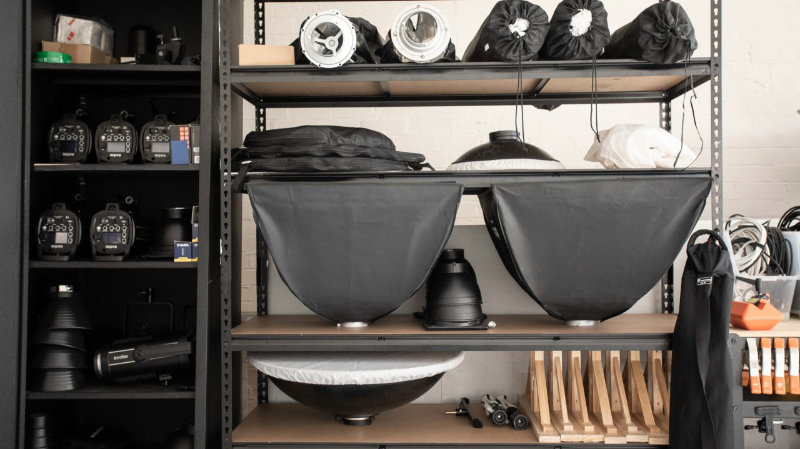
- Softbox. The all-rounder. It turns a hard point of light into a soft, flattering source. A medium softbox is the single most useful modifier for portraits and products alike.
- Umbrella. Fast to set up and forgiving to use. A shoot-through umbrella spreads soft light generously, which is lovely for groups or full-length work.
- Reflector dish. Produces a harder, punchier light with crisp shadows. Ideal for dramatic portraits and bold, graphic product looks.
- Grid. Attaches to a dish or softbox and narrows the beam, giving you precise control over where light falls. Perfect for hair lights and background accents.
- Simple reflector board. Not a light at all, but do not underestimate it. A white board bounced into the shadow side of a face can replace a second light entirely.
If you are still building your understanding of how light behaves, our guide to mastering natural and studio light pairs beautifully with this one.
Backdrops: the quiet hero of the hire list
Your background anchors every frame, and it is the item people most often forget to plan.
Seamless paper rolls are the studio standard. White is endlessly versatile, grey grades from light to dark depending on how you light it, and coloured rolls give you bold editorial looks without any editing. Check what widths are available when you book, because a full-length fashion frame needs a wider roll than a headshot.
Beyond paper, consider textured or painted canvas backdrops for character, or simply use the studio space itself. A naturally lit corner with real furniture often tells a warmer story than any roll of paper.
How to build your rental list for a specific shoot
Here is the process we suggest to photographers hiring gear with us.
- Start with the end image. Find two or three reference photos that match the look you want. Reverse-engineer the light: is it soft or hard, one source or several, bright or moody?
- Choose your key light first. One good light with the right modifier will carry most shoots on its own.
- Add only what the references demand. A fill card, a hair light, a background light. Every extra item is more setup time, so let the concept justify each one.
- Match the backdrop to the subject. Confirm the colour and width you need before the day, not on it.
- Ask the studio what they recommend. We know our own gear and our own space better than anyone, and we would much rather help you plan than watch you struggle.
Common rental mistakes to avoid
Renting more gear than you can use is the classic one. Two lights you understand will always outperform four you are wrestling with. Also watch out for forgetting the small items, like stands, sandbags and spare triggers, and for booking so tightly that you have no time to test before your subject arrives. Build in a buffer, always.
Frequently Asked Questions
What lighting equipment can I rent at Desk and Studio?
Our dry hire packages cover studio lighting and a range of backdrops, so you can hire our Petersham space and the gear together in one booking. Tell us what you are shooting and we will point you to the right package.
Is renting studio lighting expensive in Sydney?
It is far more affordable than most photographers expect, especially compared with buying. Hiring lighting bundled with a studio space usually costs a small fraction of owning the same kit.
Do I need to know how to use studio lights before I rent them?
No. A rented studio session is one of the best ways to learn. Start with one light and a softbox, take test frames, and adjust. If you would like structured guidance, our photography workshops are a friendly place to build those skills.
What is the difference between dry hire and regular studio hire?
Regular studio hire is the space itself. Dry hire adds equipment, such as lighting and backdrop packages, to your booking so you do not need to bring your own gear.
Can I rent a backdrop without renting lights?
Yes. Our packages are flexible, so you can hire exactly what your shoot needs and nothing more.
Light up your next shoot with us
Great lighting is not about owning the most gear. It is about choosing the right tools for the image in your head, and that is a skill you can start building today. At Desk and Studio, our naturally lit Petersham studio and our dry hire lighting and backdrop packages are ready when you are, and we are always happy to help you plan your setup.
Ready to give it a try? Book now and dry hire our lighting and backdrop packages for your next shoot. We would love to see what you create.
More Articles
- Hiring a Studio for an E-commerce or Apparel Shoot in Sydney
- Hiring a Studio for a Group or Team Photo in Sydney
- Photo Studio Hire by Area: Comparing Sydney Inner West, CBD and Alexandria
- Content Studio Hire in Sydney: Shoot a Month of Social Content in One Session
- Your Studio Shoot Day Run Sheet: How to Plan a Half Day or Full Day Hire in Sydney
- Natural Light Studio Hire in Sydney: How to Make the Most of a Daylight Studio
- How Much Does a Hot Desk Cost in Sydney? Day, Week and Month Rates
- Hiring a Studio for Dance, Movement and Performer Portraits in Sydney
- Photography Space for Rent in Sydney: What You Actually Get
- Hiring a Studio for a Beauty, Hair or Makeup Portfolio Shoot in Sydney
- Hiring a Studio for Family and Kids Photography in Sydney
- Hiring a Studio for a Fashion or Editorial Shoot in Sydney
- What to Expect Inside a Sydney Photography Studio
- Hiring a Studio for Headshots: How to Run a Smooth Headshot Day in Sydney
- How to Hire a Photography Studio for a Day in Sydney
- Affordable Photography Studio Hire in Sydney: How to Shoot on a Budget
- Renting Your Own Photography Studio vs Hiring by the Hour in Sydney
- How to Hire a Studio to Run Your Own Photography Workshop or Class in Sydney
- Product Photography in a Hired Studio: How to Plan, Light and Shoot Like a Pro
- Choosing Studio Lighting to Rent: A Photographer's Guide to Lights, Modifiers and Backdrops
- Your First Studio Photography Shoot: A Beginner's Guide
- Photography Studio Rental in Sydney
- Photography Workshops in Sydney and How to Choose One
- How to Find a Photo Studio Near You in Sydney
- Photo Studio Hire in Sydney's Inner West
- How to Choose the Right Photoshoot Space in Sydney
- Self-Shoot Studios: How to Take Your Own Photos in a Hired Space
- How to Hire a Studio for a Boudoir or Portrait Shoot
- How to Hire a Photography Studio in Sydney: The Complete Guide
- How Much Does It Cost to Hire a Photography Studio in Sydney?
- Hot Desk & Creative Coworking in Sydney's Inner West
- Hiring a Video Studio in Sydney: Green Screen, Lighting and Sound
- Dry Hire Explained: Renting Studio Lighting & Backdrops in Sydney
- Planning a Content or Personal Branding Shoot in a Sydney Studio
- Click, Learn, Repeat: A Photographer’s Growth Guide
- The Power of Versatility: Mastering Natural and Studio Light in Photography