Hiring a Studio for a Fashion or Editorial Shoot in Sydney
August 8, 2026
There is a particular kind of energy on a fashion shoot day. Racks of clothing rolling through the door, a stylist steaming a hem, a makeup artist working under good light, and a photographer quietly building the frame that will hold it all together. At Desk and Studio, we love these days. They are busy, collaborative and creative, and they are exactly what a hired studio is built for.
If you are planning your first fashion or editorial shoot, or you have shot on location for years and are ready to bring the work indoors, this guide will walk you through what to look for in a space, how to prepare, and how to keep the day calm enough that everyone can do their best work.
Why fashion and editorial work belongs in a studio
Location shoots have their own magic, but they also come with variables you cannot control. Weather turns. Light shifts. Permits, parking and passers-by eat into your schedule. A studio removes all of that and hands you something more valuable: repeatability.
In a studio you can light one look, shoot it, change the model, and light the next look exactly the same way. That consistency matters enormously when your images need to sit together as a set, whether that is a lookbook, a magazine feature, a brand campaign or an e-commerce drop. You also gain the practical things a fashion day quietly depends on, like somewhere private to change, somewhere to hang forty garments, and a power point near a mirror.
If you are still weighing up the options, our guide to choosing the right photoshoot space covers the broader decision, and what to expect inside a Sydney photography studio walks through the room itself.
What a fashion shoot actually needs from a space
Not every studio is set up for clothing. When you are comparing spaces, look past the square metres and ask about the things that make a styling day workable.
- A proper change and styling area. Fashion shoots involve people getting undressed, repeatedly, often in front of a small crew. A dedicated green room with a door is not a luxury, it is basic professional courtesy to your model. At Desk and Studio our green room includes clothing racks, makeup desks and a steamer, so garments arrive on set pressed and ready rather than creased from the car.
- Ceiling height and shooting distance. Full length looks need room. If you are shooting head to toe on an 85mm lens you need to physically stand back, and if you are lighting from above you need height to get the modifier out of frame. Ask for the shooting floor dimensions and the ceiling height, not just the total floor area.
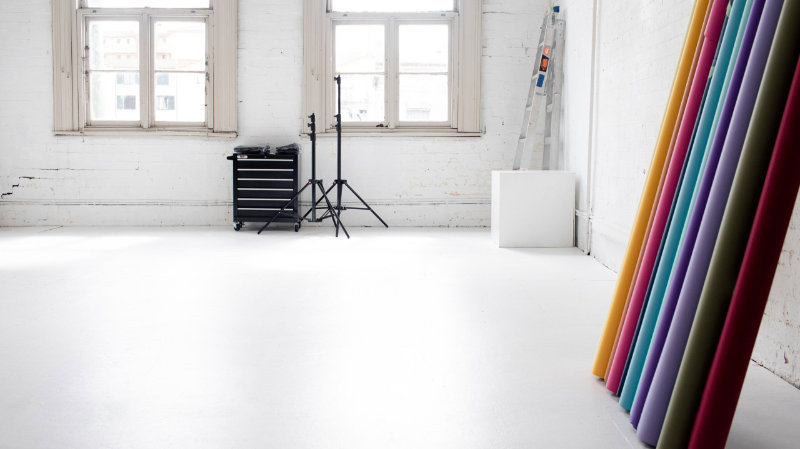
- Backdrops that suit the brief. Seamless paper is the workhorse of editorial. White for clean commercial work, grey for something moodier, colour when the styling calls for it. Check which rolls are available and whether you can bring your own.
- Enough power, in the right places. Strobes, continuous lights, a steamer, a laptop for tethering, phone chargers for six people. It adds up. Ask where the outlets are.
- Load in and parking. Racks, garment bags and lighting cases are heavy and awkward. A ground floor entrance or a short, flat walk from the car makes an enormous difference to how everyone feels at 8am.
- Natural light as well as strobe. A studio with genuine natural light gives you a soft, flattering option for beauty and lifestyle frames without setting up a single head. Being able to switch between the two in one booking is a real creative advantage, which we explore further in mastering natural and studio light.
Planning the shoot before the day
The best fashion shoots are decided long before anyone picks up a camera. A little planning turns a chaotic day into a productive one.
- Build a shot list around looks, not hours. Count your looks, then work backwards. A realistic pace for a well prepared crew is roughly twenty to thirty minutes per look including the change, so eight looks is a comfortable four hour booking rather than a two hour scramble.
- Make a moodboard and share it with everyone. Your stylist, your makeup artist and your model should all see the same references. It saves an enormous amount of on the day discussion and keeps the set coherent.
- Sort the running order in advance. Group looks by lighting setup and by backdrop colour so you are not relighting between every change. Shoot the hero look while everyone is fresh, not at the end when the energy has dropped.
- Confirm who is bringing what. Steamer, tape, clips, pins, spare batteries, a card reader, snacks. Write the list down and assign owners. Clips and pins in particular are what turn a sample size garment into something that fits.
- Book enough time to pack down. Studios run to a schedule and the crew after you deserve a clean room. Add half an hour to your booking for wrapping cables, rolling backdrops and getting the racks out.
- Have a tethering plan. Editorial and campaign clients almost always want to see frames as you shoot. Bring the cable, the clamp and a stand, and test it before the model is standing on set waiting.
Lighting looks that flatter clothing
Fashion lighting is really about texture and shape. Fabric needs to read as fabric, and the silhouette needs to stay clean.
- Start with one light and a big modifier. A large softbox or octabox at around forty five degrees, slightly above eye line, gives you soft, directional light that shows drape and weave without flattening everything out.
- Use a reflector before you use a second light. A simple white bounce on the shadow side lifts detail without complicating the setup.
- Separate the subject from the backdrop. Move your model a couple of metres forward and the background falls away naturally. Add a light on the backdrop only if you want it brighter or cleaner than the subject.
- Watch for shine on synthetics. Satin, leather and vinyl throw specular highlights. Feather the light or move it further back rather than turning the power down.
- Shoot a tethered test with the real garment. Colours behave differently under strobe than they do on a phone screen. Set your white balance on a grey card and check the first frame properly.
If you do not own a full kit, you do not need to. Our dry hire lighting and backdrop packages let you add exactly what the brief needs for the day, and our guide to choosing studio lighting to rent explains which modifiers do what.
Looking after your model and crew
A fashion shoot is a people day as much as a technical one. The images will show how everyone felt.
Keep the room warm, because standing still in sample clothing is colder than it looks. Schedule real breaks. Feed people. Give your model somewhere private to change and never rush them out of it. Play music that suits the mood you are trying to create. And show a frame or two on the screen early, because confidence builds quickly when someone can see that the work is going well.
If you are new to directing on set, our beginner’s guide to your first studio shoot is a good companion piece.
Frequently Asked Questions
How long should I book the studio for a fashion shoot?
Count your looks and allow twenty to thirty minutes each, then add time at both ends for setup and pack down. Most small editorial shoots land comfortably in a four hour booking. Larger campaigns with multiple models and lighting changes usually want a full day.
Do I need to bring my own lighting?
Not necessarily. You can bring your own kit, or dry hire lighting and backdrop packages so you only pay for what the shoot actually needs. It is worth deciding early, because the setup you choose shapes your running order.
Can my stylist and makeup artist work at the same time as I shoot?
Yes, and that is exactly why a separate green room matters. With clothing racks, makeup desks and a steamer in their own area, prep for the next look happens while you are still shooting the current one.
What backdrop should I use for a lookbook?
Clean white or a soft neutral grey is the safest choice for a set that needs to feel cohesive and let the clothing lead. Save colour for editorial or campaign work where the styling is built around it.
How much does it cost to hire a studio for a fashion shoot in Sydney?
It depends on the hours you need and whether you add equipment. Our guide to studio hire costs breaks down what to budget for.
Is there parking and easy load in?
Ask every studio you consider, because racks and cases are heavy. We are in Petersham in Sydney’s Inner West, just across from Norton Street in Leichhardt, with a straightforward load in.
Come and shoot with us
Fashion and editorial work rewards preparation, and the right room makes that preparation pay off. If you have a lookbook, a campaign or a personal editorial project you have been meaning to make, we would love to host it. Our natural light studio, green room and dry hire lighting packages are here so you can spend the day thinking about the pictures rather than the logistics.
Ready to take a tour, or want to talk through what your shoot needs? Book now and let’s get your shoot day in the diary.
More Articles
- Photo Studio Hire by Area: Comparing Sydney Inner West, CBD and Alexandria
- Content Studio Hire in Sydney: Shoot a Month of Social Content in One Session
- Your Studio Shoot Day Run Sheet: How to Plan a Half Day or Full Day Hire in Sydney
- Natural Light Studio Hire in Sydney: How to Make the Most of a Daylight Studio
- How Much Does a Hot Desk Cost in Sydney? Day, Week and Month Rates
- Hiring a Studio for Dance, Movement and Performer Portraits in Sydney
- Photography Space for Rent in Sydney: What You Actually Get
- Hiring a Studio for a Beauty, Hair or Makeup Portfolio Shoot in Sydney
- Hiring a Studio for Family and Kids Photography in Sydney
- Hiring a Studio for a Fashion or Editorial Shoot in Sydney
- What to Expect Inside a Sydney Photography Studio
- Hiring a Studio for Headshots: How to Run a Smooth Headshot Day in Sydney
- How to Hire a Photography Studio for a Day in Sydney
- Affordable Photography Studio Hire in Sydney: How to Shoot on a Budget
- Renting Your Own Photography Studio vs Hiring by the Hour in Sydney
- How to Hire a Studio to Run Your Own Photography Workshop or Class in Sydney
- Product Photography in a Hired Studio: How to Plan, Light and Shoot Like a Pro
- Choosing Studio Lighting to Rent: A Photographer's Guide to Lights, Modifiers and Backdrops
- Your First Studio Photography Shoot: A Beginner's Guide
- Photography Studio Rental in Sydney
- Photography Workshops in Sydney and How to Choose One
- How to Find a Photo Studio Near You in Sydney
- Photo Studio Hire in Sydney's Inner West
- How to Choose the Right Photoshoot Space in Sydney
- Self-Shoot Studios: How to Take Your Own Photos in a Hired Space
- How to Hire a Studio for a Boudoir or Portrait Shoot
- How to Hire a Photography Studio in Sydney: The Complete Guide
- How Much Does It Cost to Hire a Photography Studio in Sydney?
- Hot Desk & Creative Coworking in Sydney's Inner West
- Hiring a Video Studio in Sydney: Green Screen, Lighting and Sound
- Dry Hire Explained: Renting Studio Lighting & Backdrops in Sydney
- Planning a Content or Personal Branding Shoot in a Sydney Studio
- Click, Learn, Repeat: A Photographer’s Growth Guide
- The Power of Versatility: Mastering Natural and Studio Light in Photography