Hiring a Studio for Headshots: How to Run a Smooth Headshot Day in Sydney
August 2, 2026
Headshot days are deceptively demanding. On paper it is the simplest job in photography: one person, one light, one background, repeat. In practice you are managing a queue of nervous people, holding your lighting consistent across four hours, keeping to a schedule someone else has set, and delivering images that all look like they belong to the same set.
At Desk and Studio, headshot sessions are one of the most common reasons photographers book our space, and the ones that run beautifully all have the same thing in common: the setup was decided before anyone walked through the door.
Here is how to plan one properly.
Why a hired studio beats the office boardroom
Plenty of headshot work still happens on location, and there is nothing wrong with that. But if you have the choice, a studio gives you three advantages that are hard to replicate in a borrowed meeting room.
Consistency. In a studio, nothing changes between your first subject at 9am and your last at 4pm. No cloud passing the window, no afternoon sun creeping across the wall, no fluorescent ceiling light fighting your key. Every frame matches, which matters enormously when the images will sit in a grid on an About Us page.
Control. You get real backdrop options, proper distance between subject and background, and the ability to shape light exactly how you want it rather than working around whatever the room gives you.
A calmer experience for your subjects. This one is underrated. Most people find being photographed mildly uncomfortable, and doing it in front of their colleagues in the middle of the office makes it worse. A dedicated space with a door, somewhere to sit and a mirror to check themselves in changes the whole mood, and it shows in the faces.
What to look for when you book
Not every studio suits a headshot day. These are the things worth confirming before you pay a deposit.
- Depth, not just floor area. You need enough room to put your subject well clear of the backdrop, ideally two to three metres, so the background stays clean and evenly lit. Then you need distance behind you to shoot at 85mm or longer, which is what gives headshots their flattering compression. A wide but shallow room is the wrong shape for this job.
- Backdrop options. Confirm what colours are available. Grey is the workhorse for corporate work because you can light it anywhere from near-white to near-black. White reads clean and modern, and a dark backdrop suits more dramatic executive portraits.
- A waiting area. If you are photographing a team, people will arrive in clusters. Somewhere for them to sit that is not in your shot keeps the day calm.
- A mirror and a place to tidy up. Collars, hair, lipstick, a quick steam of a creased shirt. Our green room handles this, and it removes a surprising amount of friction.
- Access and parking. If your client’s staff are travelling to you, make sure you can give them clear directions and realistic parking advice.
- Booking length and bump-in. Check whether your hire window includes setup. You want a solid half hour before your first subject to build and test your lighting, not to be still adjusting a stand when they walk in.
If you are weighing up different spaces more broadly, our guide to choosing the right photoshoot space in Sydney covers the wider decision.
A lighting setup that works every time
You do not need an elaborate rig. Here is a reliable three-part setup that suits almost any corporate or personal headshot brief.
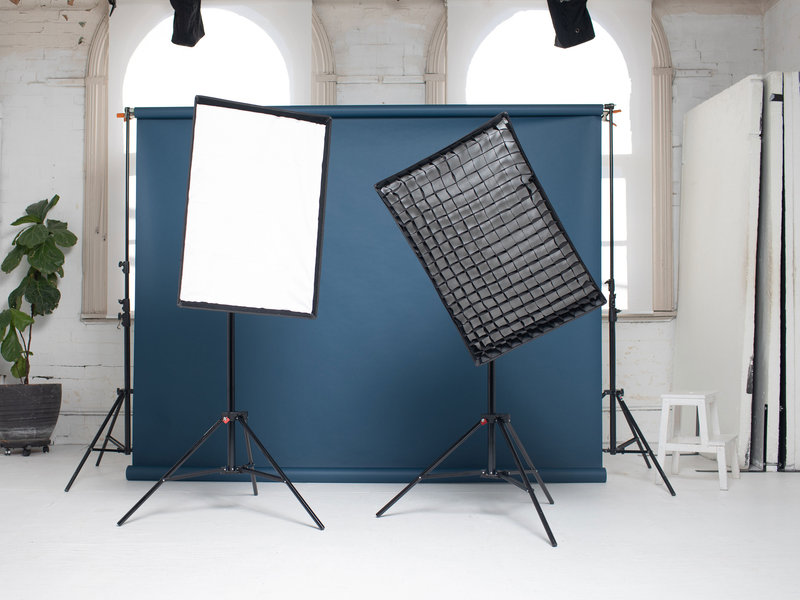
Key light. One strobe with a large softbox or a beauty dish, positioned slightly above eye level and angled down at roughly forty-five degrees. Bring it close. Closer means softer, and soft is forgiving.
Fill. A white reflector on the opposite side, angled back into the shadow. This lifts the shadow side just enough to keep things professional rather than moody. A second light works too, but a reflector is faster and one less thing to trip over.
Background light. A separate light aimed at the backdrop. This is what gives you a clean, even background and stops your subject blending into it. Adjust its power to take the same grey roll from light and airy to deep and moody without changing anything else in your setup.
Optionally, add a rim light behind and to one side for a more editorial look, especially useful for darker hair against a darker background.
Once it is dialled in, mark your light positions and your subject’s foot position on the floor with tape. This is the single most valuable thing you can do on a headshot day. It means subject fourteen is lit identically to subject one, and it lets you reset instantly if something gets bumped.
If you want to go deeper on modifier choice, our guide to choosing studio lighting to rent breaks down what each one does, and you can dry hire lighting and backdrop packages with the space so it is all waiting for you.
Running the day itself
Build a realistic schedule. For corporate headshots, allow eight to ten minutes per person. That sounds generous until you account for someone arriving late, a subject who needs longer to relax, and the two minutes of chat that produces the only genuine smile of the session. For premium personal branding portraits, allow thirty to sixty minutes each.
Add buffer. Slot a ten-minute gap every hour. It absorbs overruns, lets you check your files, and gives you a moment to breathe.
Shoot tethered if you can. A large screen lets subjects see themselves quickly, which builds confidence fast, and it lets your client approve the look early rather than after everyone has gone home.
Direct actively. Most people have no idea what to do with their hands, their weight or their chin. Give simple physical instructions rather than emotional ones. “Shift your weight to your back foot”, “chin forward slightly and down”, “push your shoulders back” all work better than “relax” or “look natural”.
Get the brief in writing beforehand. Backdrop colour, crop, whether it is head and shoulders or three-quarter, dress code, and how many final images per person. Ambiguity discovered at 2pm is expensive.
Five things that quietly ruin headshot days
- Not checking wardrobe in advance. Send a short guide to your client the week before. Solid mid-tones photograph best, tight patterns can moiré, and everyone should bring a spare top.
- Letting the schedule drift in the first hour. Early overruns compound. Protect the start of the day fiercely.
- Forgetting a steamer. Creased shirts are the most common and most fixable problem you will face.
- Changing your lighting mid-session. If you improve your setup at subject ten, you now have two sets of images that do not match. Lock it in and leave it.
- Running out of card or battery. Headshot days produce enormous frame counts. Bring more of both than you think you need.
Frequently Asked Questions
How long should I book a studio for a corporate headshot day? Work backwards from your headcount. At eight to ten minutes per person, twenty people is roughly three to four hours of shooting. Add thirty to forty-five minutes for setup and testing at the start, and a little at the end for pack-down. For twenty people, a five-hour booking is comfortable.
What backdrop colour is best for corporate headshots? Mid-grey is the most versatile, because you can light it lighter or darker without changing rolls. White suits modern, clean brand looks, and a dark grey or black backdrop works well for executive or more dramatic portraits. Confirm the brief with your client before the day.
Do I need more than one light for headshots? No. One key light and a reflector will produce genuinely professional headshots. A second light on the background gives you far more control over the final look, so two lights plus a reflector is the practical sweet spot.
Can I hire a studio for just a few headshots? Absolutely. Plenty of people book a short session for a single professional portrait or a small team of two or three. You do not need a full day to justify hiring a proper space.
What lens should I use for headshots? Something in the 85mm to 135mm range on full frame is the classic choice. The longer focal length flattens features flatteringly and separates your subject from the background. Just make sure the studio is deep enough to let you stand far enough back.
Book your headshot day with us
A good headshot day feels almost boring while it is happening, and that is exactly the goal. The lighting is locked, the schedule holds, people arrive, sit, laugh a little and leave feeling better about themselves than they expected to.
If you are planning headshots in Sydney and want a space with the depth to shoot long, proper backdrops, lighting you can hire alongside the room and a green room for people to tidy up in, we would love to host you. Book now to secure your studio time, or get in touch if you would like to walk the space first and plan your setup with us.
More Articles
- Photo Studio Hire by Area: Comparing Sydney Inner West, CBD and Alexandria
- Content Studio Hire in Sydney: Shoot a Month of Social Content in One Session
- Your Studio Shoot Day Run Sheet: How to Plan a Half Day or Full Day Hire in Sydney
- Natural Light Studio Hire in Sydney: How to Make the Most of a Daylight Studio
- How Much Does a Hot Desk Cost in Sydney? Day, Week and Month Rates
- Hiring a Studio for Dance, Movement and Performer Portraits in Sydney
- Photography Space for Rent in Sydney: What You Actually Get
- Hiring a Studio for a Beauty, Hair or Makeup Portfolio Shoot in Sydney
- Hiring a Studio for Family and Kids Photography in Sydney
- Hiring a Studio for a Fashion or Editorial Shoot in Sydney
- What to Expect Inside a Sydney Photography Studio
- Hiring a Studio for Headshots: How to Run a Smooth Headshot Day in Sydney
- How to Hire a Photography Studio for a Day in Sydney
- Affordable Photography Studio Hire in Sydney: How to Shoot on a Budget
- Renting Your Own Photography Studio vs Hiring by the Hour in Sydney
- How to Hire a Studio to Run Your Own Photography Workshop or Class in Sydney
- Product Photography in a Hired Studio: How to Plan, Light and Shoot Like a Pro
- Choosing Studio Lighting to Rent: A Photographer's Guide to Lights, Modifiers and Backdrops
- Your First Studio Photography Shoot: A Beginner's Guide
- Photography Studio Rental in Sydney
- Photography Workshops in Sydney and How to Choose One
- How to Find a Photo Studio Near You in Sydney
- Photo Studio Hire in Sydney's Inner West
- How to Choose the Right Photoshoot Space in Sydney
- Self-Shoot Studios: How to Take Your Own Photos in a Hired Space
- How to Hire a Studio for a Boudoir or Portrait Shoot
- How to Hire a Photography Studio in Sydney: The Complete Guide
- How Much Does It Cost to Hire a Photography Studio in Sydney?
- Hot Desk & Creative Coworking in Sydney's Inner West
- Hiring a Video Studio in Sydney: Green Screen, Lighting and Sound
- Dry Hire Explained: Renting Studio Lighting & Backdrops in Sydney
- Planning a Content or Personal Branding Shoot in a Sydney Studio
- Click, Learn, Repeat: A Photographer’s Growth Guide
- The Power of Versatility: Mastering Natural and Studio Light in Photography